01
Framing the opportunity
Furniture needs more decision support than a conventional product catalogue
Furniture is expensive, spatial, and difficult to judge from a product card. Customers need to understand scale, material, delivery, assembly, and support before they can feel ready to commit. A generic ecommerce pattern can display a product and price while leaving those harder questions unanswered.
I co-created the product requirements document and contributed secondary market and competitor research. We used that work to define the opportunity, product principles, requirements, risks, and future success measures before moving into the experience design.
02
Product direction
Three principles shaped the marketplace experience
The design direction focused on the uncertainty surrounding a furniture decision. Instead of adding more promotional layers, I organised the interface around evaluation, contextual trust, and access to help.
01
Help people evaluate
Bring dimensions, materials, delivery expectations, care, and support closer to the product decision.
02
Place trust in context
Show service and seller information where uncertainty appears instead of hiding it in policy pages.
03
Support different paths
Connect direct shopping with wishlists, bespoke requests, and business enquiries.
These principles also created a useful boundary. KASADA could feel premium without becoming purely decorative, and it could present service concepts without pretending that the underlying marketplace operations had already been validated.
03
Experience architecture
From inspiration to a more informed decision
I structured the experience as a decision journey rather than a list of features. The customer first discovers a visual direction, then evaluates the object, explores how it might work in context, asks for help when needed, and only then prepares to purchase.
01
Discover
Enter through editorial storytelling, room categories, or collections.
02
Evaluate
Compare product imagery, dimensions, materials, price, and delivery context.
03
Visualize
Explore a camera-assisted preview before deciding.
04
Get support
Move into bespoke or business enquiry when a standard cart is not enough.
05
Prepare to buy
Save, review, and create an order record in the interactive prototype.
KASADA.
Portfolio reconstruction
Browse by room
Start with the space, then compare the object.

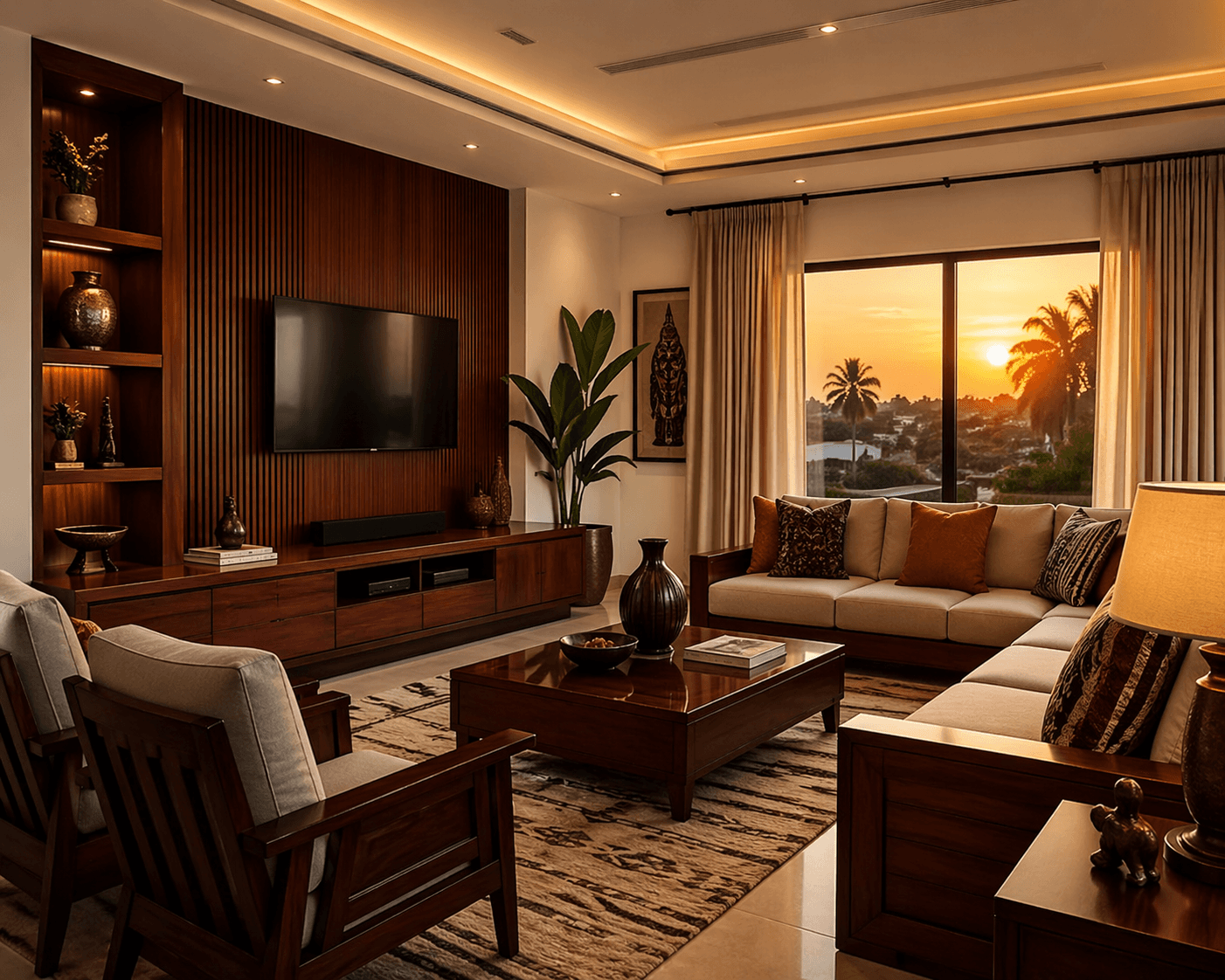
Living room
Seating collection
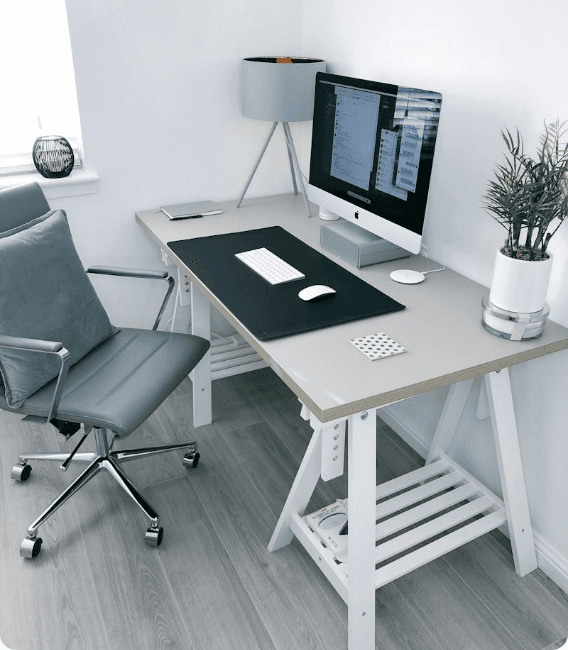
Office
Amakisi work table
Inspiration
Room-led discovery
This model allowed direct shopping, collaborative shortlisting, bespoke requests, and business enquiries to coexist without forcing every furniture decision into an instant checkout.
04
The product as a decision hub
Practical information sits beside the visual story
The product page brings imagery, price, material, dimensions, delivery expectations, seller context, and optional assembly into one decision surface. The goal was to reduce the number of unanswered questions a customer carries away from the page.
Prototype imagery
Office · Contemporary
Portfolio reconstruction
Amakisi Work Table
₦125,000
Product imagery leads the page, while practical information stays close enough to support comparison and planning.
- Material
- Mahogany
- Dimensions
- 120 × 75 × 60 cm
- Assembly
- Optional service concept
- Delivery
- Estimate shown before checkout
The hierarchy is deliberately amount-and-object first, with supporting information grouped below. This keeps the page editorial while still making the details needed for a high-consideration purchase easy to scan.
05
Visualization as decision support
A prototype for judging placement before purchase
The camera-assisted visualization concept explores one of the highest-risk furniture questions: how an object might feel in the customer's room. The prototype combines a camera view with 3D or 2D product placement so customers can compare approximate scale and position.
- 01Choose a productStart from the object already being evaluated.
- 02Open the room previewUse the camera or a supported 3D viewer.
- 03Compare placementAdjust position and scale as an approximate decision aid.
06
Assisted purchase paths
Not every furniture decision belongs in an instant checkout
KASADA includes two assisted paths for decisions that require more context. The bespoke flow captures a project title, brief, and budget. The business flow captures sector, company details, contact information, and a project brief.
Bespoke request
Define the idea
- Project title
- Ikoyi reading nook
- Brief
- A compact reading chair and side table in natural rattan.
- Target budget
- ₦750,000
The form turns an open-ended request into a brief that can be reviewed before any service commitment.
Business enquiry
Frame the project
- Sector
- Corporate workspace
- Company
- Sample workplace project
- Project brief
- Furniture for a collaborative office lounge and meeting area.
The enquiry path creates a clear starting point without promising discounts, response times, or fulfilment capacity.
07
Brand and visual system
Editorial contrast keeps the furniture in focus
KASADA's coded prototype uses a restrained brand system: near-black editorial headings, an alabaster canvas, copper emphasis, and slate supporting text. Playfair Display gives product stories a distinctive voice, while Plus Jakarta Sans keeps navigation, details, and controls practical to read.
Onyx
Editorial headings
#0A0A0A
Alabaster
Product canvas
#FAFAF9
Copper
Selection and emphasis
#B45309
Slate
Supporting detail
#475569
Playfair Display is used for headings; Plus Jakarta Sans carries body copy and interface controls. Large editorial titles introduce the collection, while compact labels and product facts support comparison.
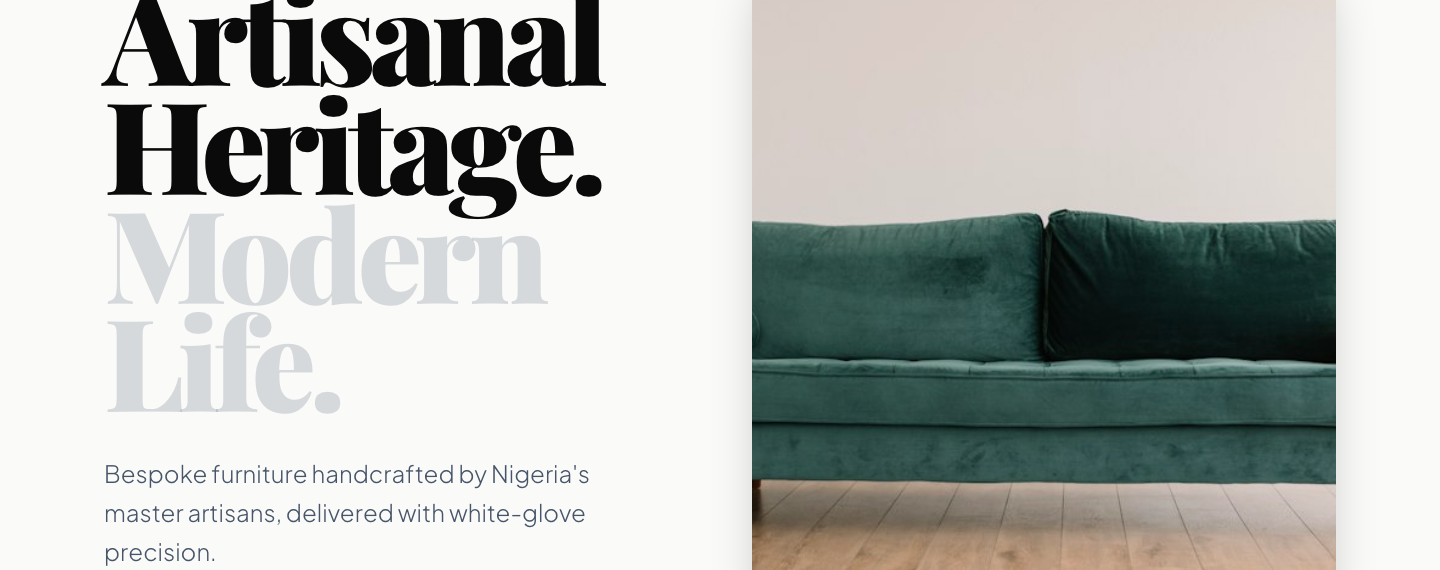
Open the existing screen at full size.
Product cards
Give the object room, then surface price and useful context.
Pill controls
Keep actions and selected states distinct without crowding imagery.
Decision details
Place material, dimensions, and service choices near the purchase decision.
08
Prototype status
Separating the designed experience from marketplace operations
The interactive prototype extends beyond static screens, but code coverage does not prove a live marketplace. I separated the experience represented in the prototype from the operational capabilities that remain unverified.
Represented in the coded prototype
- Responsive catalogue and product discovery
- Authentication and collaborative wishlists
- Cart and order-record creation
- Bespoke and B2B enquiry capture
- Loyalty and recommendation prototypes
- Experimental 3D / camera-assisted preview
Conceptual or unverified
- Live payments, escrow, or BNPL
- Seller onboarding, KYC, and payouts
- Verified customer reviews
- Live delivery and assembly operations
- Dispute resolution or WhatsApp automation
- Marketplace adoption or business impact
The PRD's GMV, adoption, delivery, repeat-purchase, conversion, and satisfaction numbers are future success measures—not achieved outcomes. The current case study therefore focuses on product definition, design decisions, and prototype coverage.
09
Reflection and next steps
Visual polish can invite attention; operational evidence creates trust
KASADA reinforced that a premium marketplace cannot rely on aesthetics alone. High-consideration purchases need clear dimensions, service expectations, useful support routes, and trust signals connected to real operational systems.
The next step would be to validate the riskiest assumptions with buyers, artisans, and business customers. I would test whether the product-detail hierarchy answers the questions people actually ask, whether the visualization changes confidence or only adds novelty, and when customers prefer direct checkout, consultation, or bespoke enquiry.
What the project demonstrates
Product-definition work, evidence-aware experience architecture, responsive ecommerce UX, a coherent premium visual system, and design-to-prototype continuity.
What still needs proof
Primary research, usability testing, real seller operations, payment and delivery integration, and evidence that the proposed trust model improves purchase confidence.